Connect HackerOne
The HackerOne integration imports the reports of a HackerOne program into the Bug Bounty Validator, where you can validate them with a scan. Ostorlab only reads the reports: it changes nothing in HackerOne.
What do I need before I start?
- An Ostorlab plan that includes integrations, and the Admin role in your Ostorlab organisation.
- A HackerOne organization admin. Only organization admins can create API tokens, and only when the HackerOne plan includes API access.
- The handle of the program: the last part of the program URL, for example
acmeforhttps://hackerone.com/acme.
Create an API token in HackerOne
These steps follow the HackerOne documentation: API Tokens and Getting Started.
- In HackerOne, open Organization Settings > API Tokens.
- Click Create API Token.
- Enter an identifier for the token, for example
ostorlab. This is the API identifier that Ostorlab asks for, not your HackerOne username. - Select a group that has access to the program. The token gets the permissions of its groups: a token without a group has no access.
- Click Add API token.
- Copy the token, then click I have stored the API Token.
To change the groups of an existing token, open the token menu, click Edit API token, then Manage groups for this API token.
Add the configuration in Ostorlab
- Open Integrations/API > Integrations, select the Bug Bounty category, then HackerOne.
-
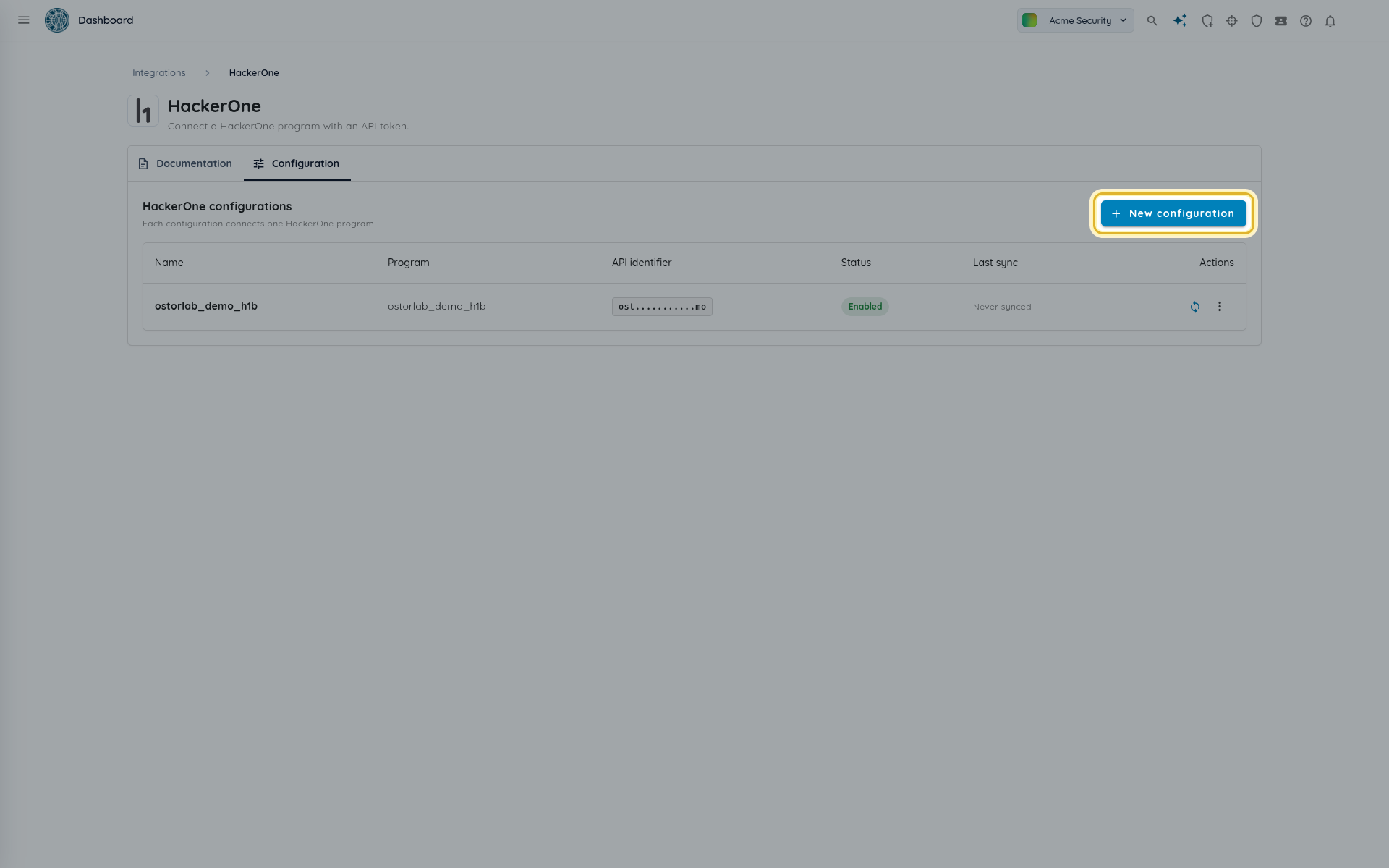
Open the Configuration tab and click New configuration.
-
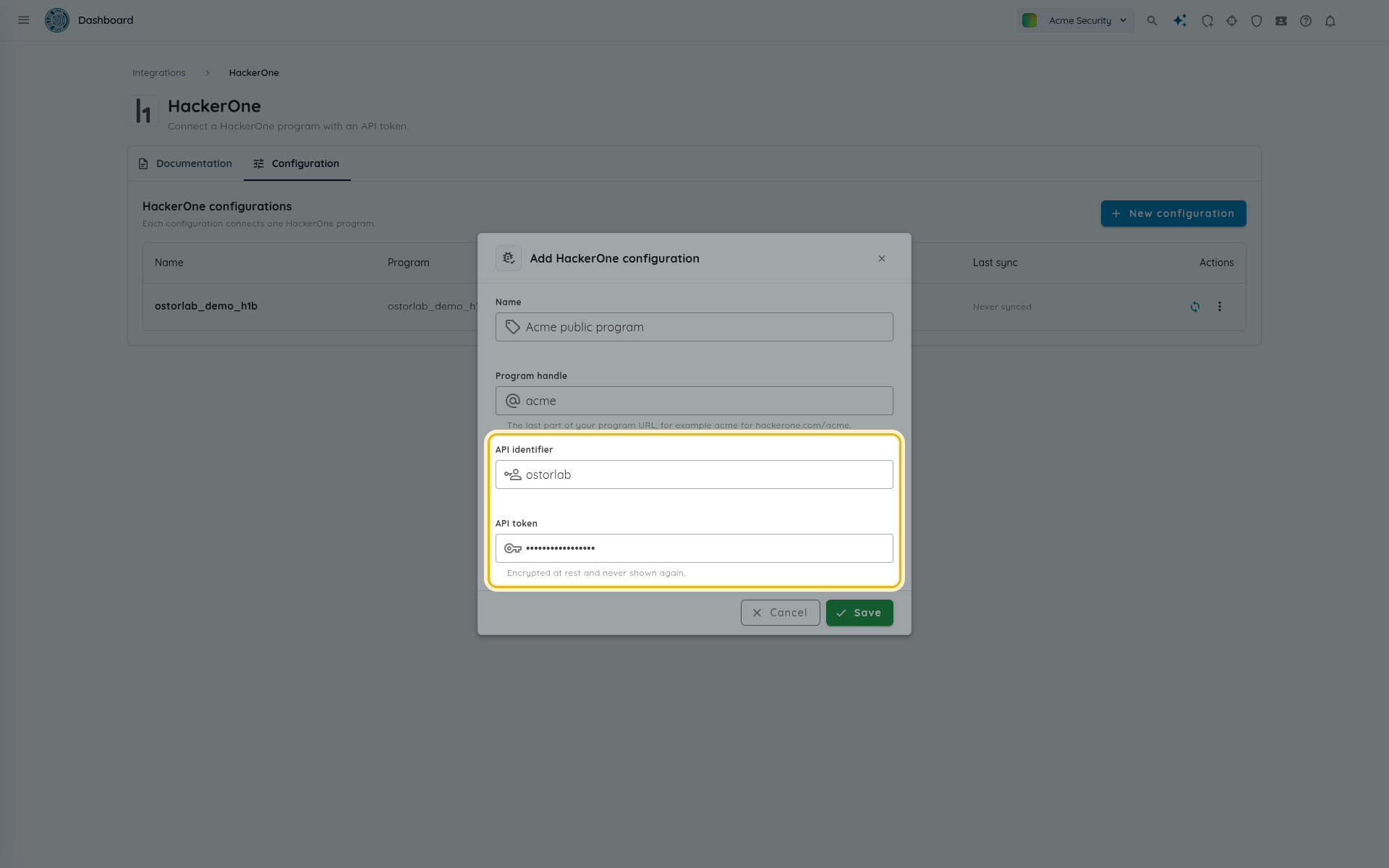
Fill in the form, then click Save.
| Field | What to enter |
|---|---|
| Name | A name for the configuration, for example Acme public program. |
| Program handle | The handle of the program. Ostorlab stores it in lower case. |
| API identifier | The identifier of the API token. |
| API token | The value of the API token. It is encrypted at rest and never shown again. |
A program can be connected only once in an organisation.
Test the connection
Open the action menu of the configuration and click Test connection.
| Check | What it verifies | If it fails |
|---|---|---|
| Credentials | HackerOne accepts the API identifier and the API token. | Check both values, and that the token was not deleted. |
| Program access | The token can read the reports of the program. | Check the program handle, and that one of the token's groups has access to the program. HackerOne also refuses requests from outside the IP allowlist of your organization, and from organizations whose plan does not include API access. |
When Credentials fails, Program access is not run.
Import the reports
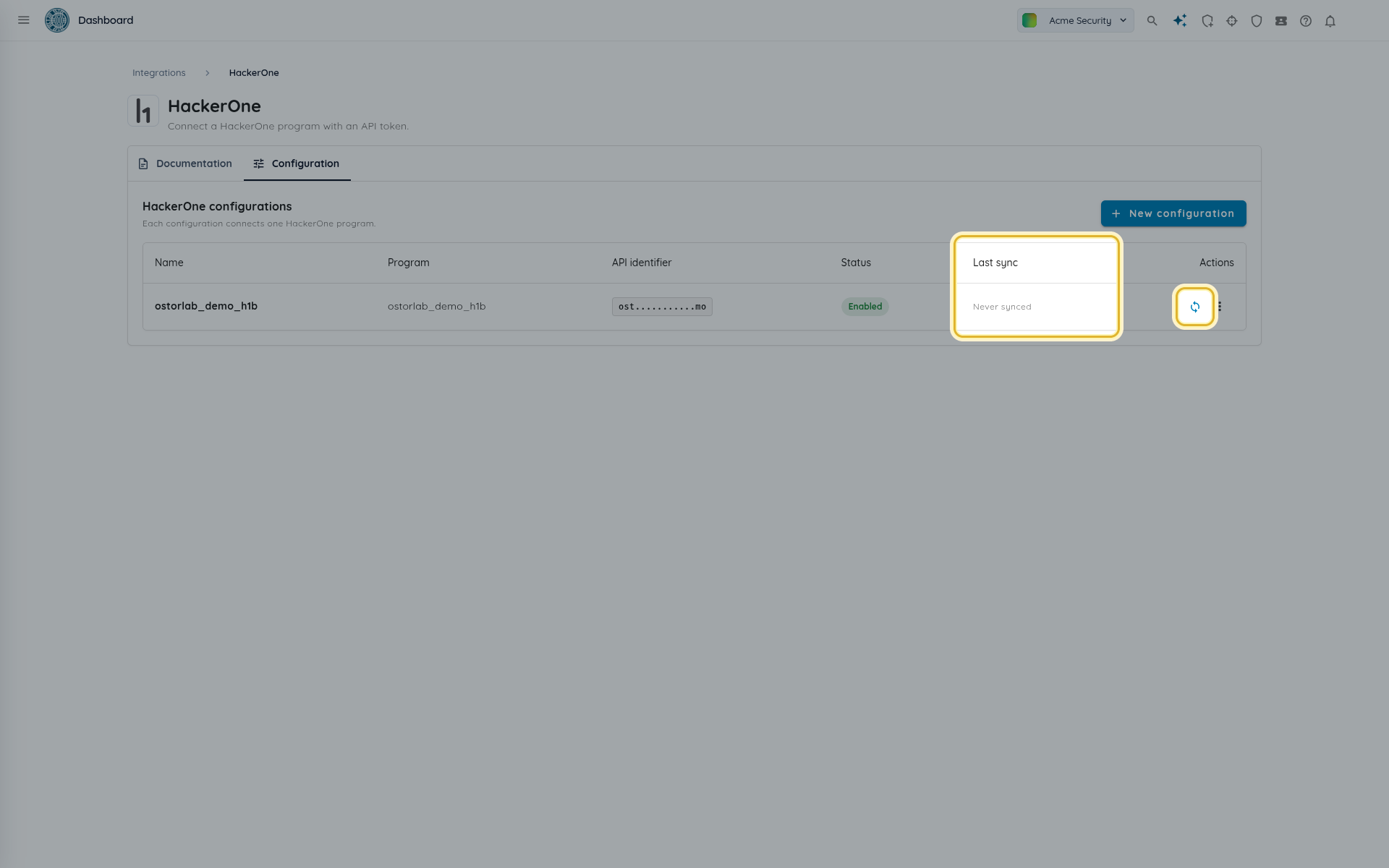
Ostorlab imports the reports of every enabled configuration every hour. To import right away, click Sync now (the sync icon) on the configuration. The first sync imports every report of the program. The next ones import the reports with activity since the last successful sync.
The Last sync column shows:
- Never synced before the first sync;
- Synced and the date of the last successful sync;
- Failed when the last sync failed. Hover over it to read the error. The date of the last successful sync is shown below it.
The imported reports appear in Bug Bounty Validator. See Validate bug bounty reports.
Edit, disable or delete the configuration
Use the action menu of the configuration:
- Edit changes the name, the program handle, the credentials and the Enabled switch. Leave API identifier or API token empty to keep the saved value. After a change of program handle, the next sync imports every report of the new program.
- Disable stops the hourly sync of the configuration, and Sync now is no longer available. The reports already imported stay. Enable turns it back on.
- Delete removes the configuration and its API token from Ostorlab. The reports it imported and their validation history are deleted too. The validation scans stay in your scans.