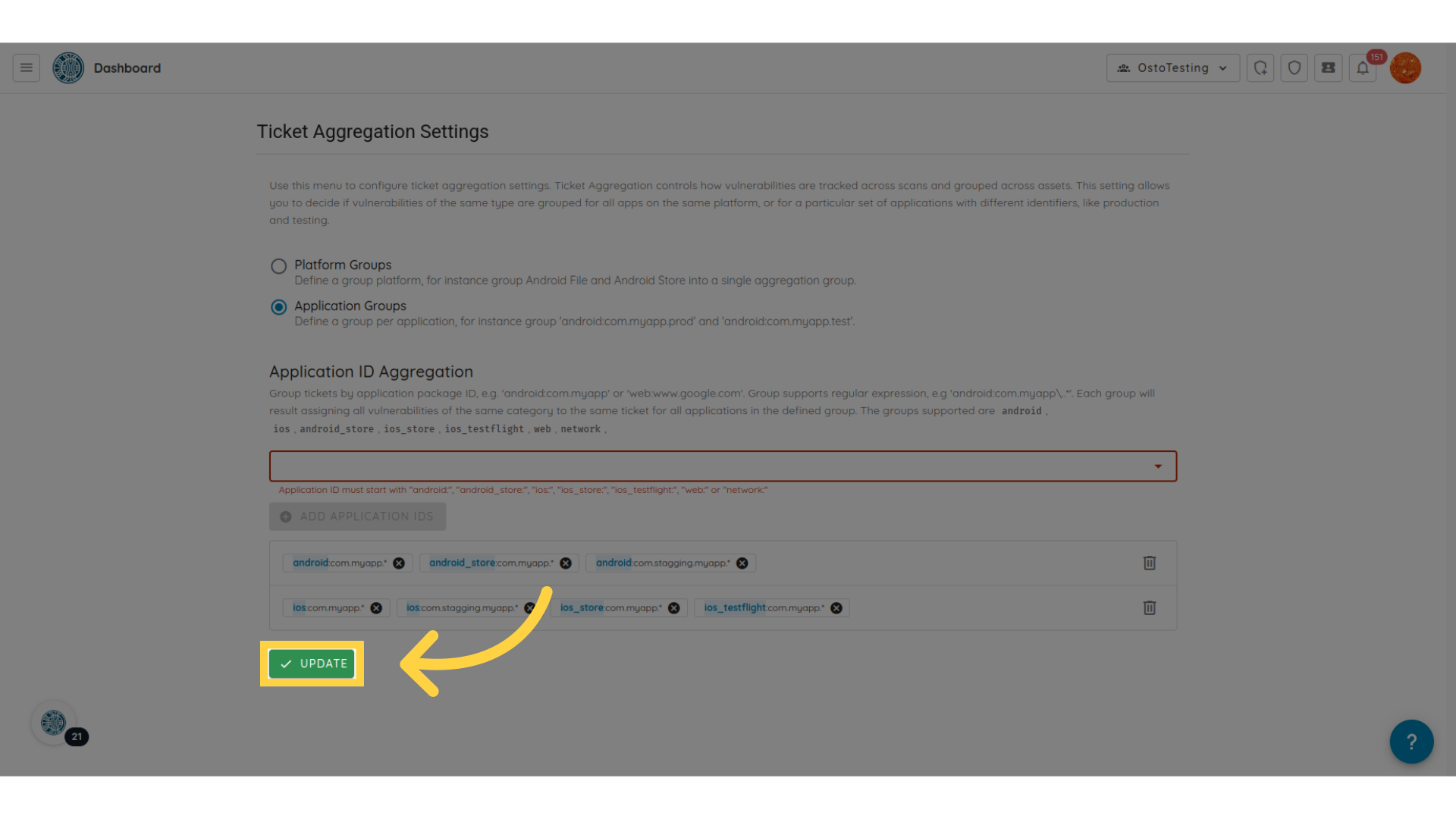
How to configure ticket aggregation settings using Application IDs grouping
This guide will explore how to set the Ostorlab Ticket Aggregation Settings using application IDs grouping.
The ticket aggregation settings allow you to group the vulnerabilities based on defined criteria that can ease the vulnerability management lifecycle.
To set the ticket aggregation setting, follow these steps:
-
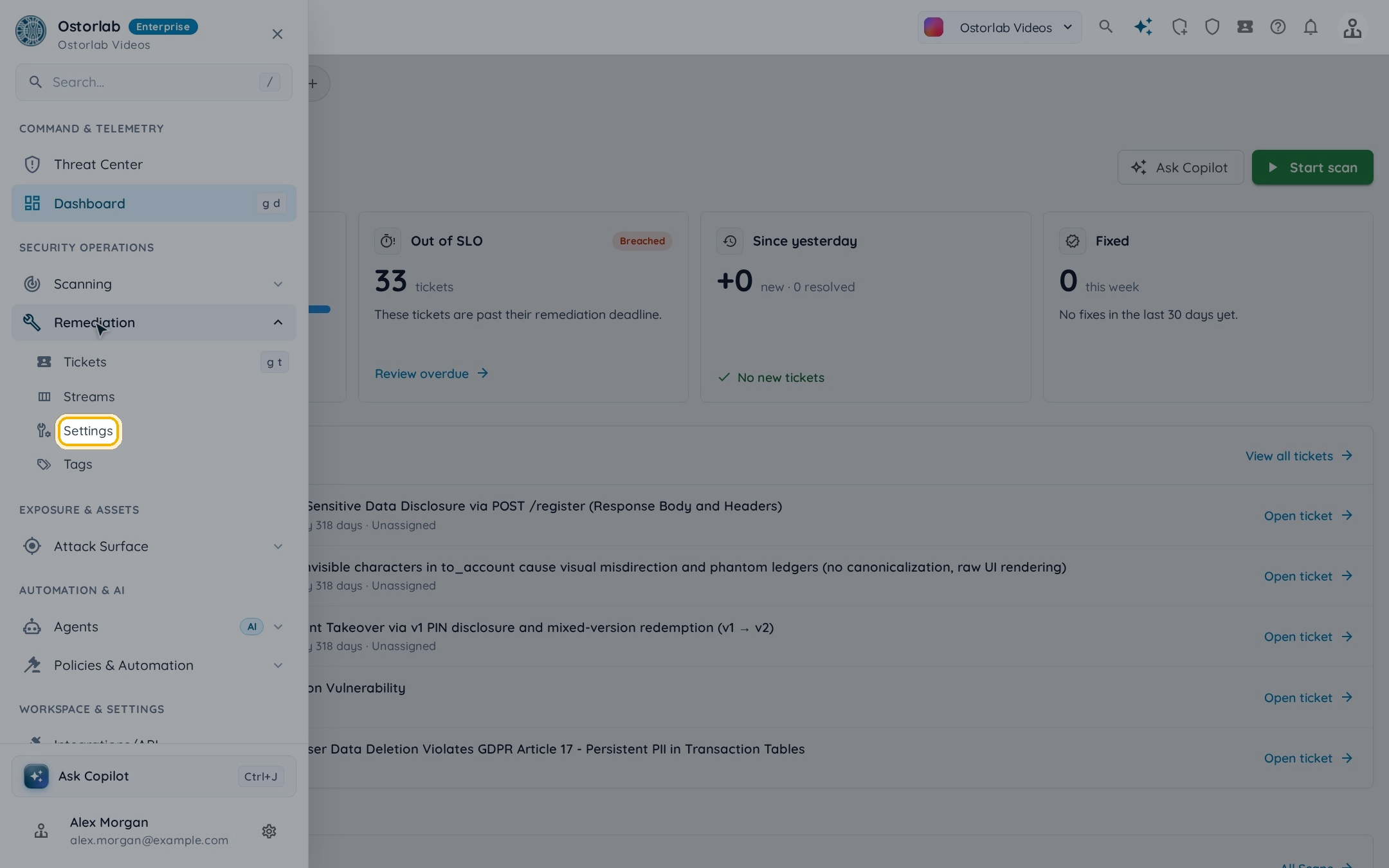
In the menu, open Remediation, then Settings.
-
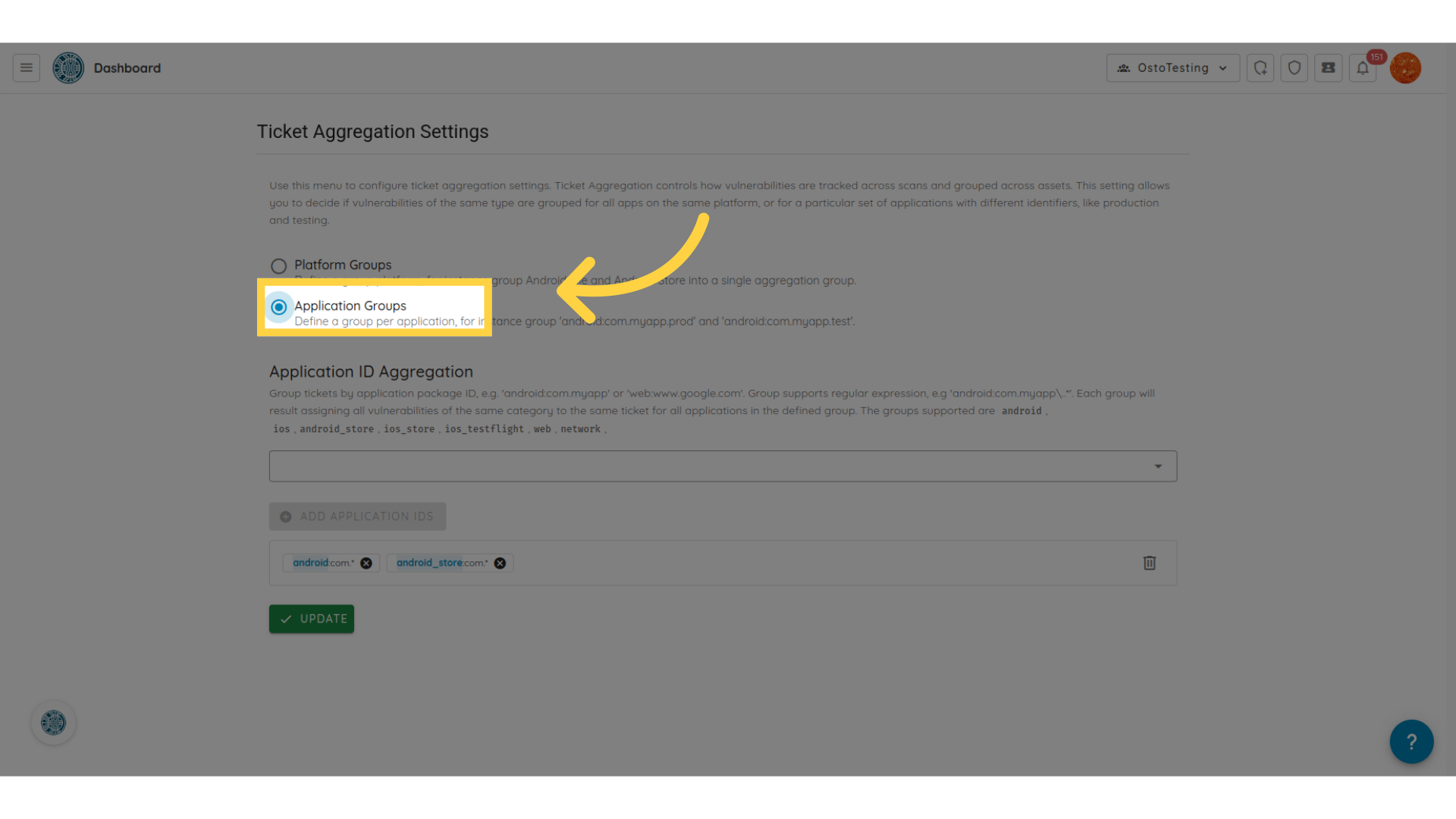
Select Application Groups, then click Continue to Grouping.
-
Add the Application IDs to group together: type each one in Application Package IDs and press Enter. The prefix buttons above the field insert the platform prefix (for example,
android_file:).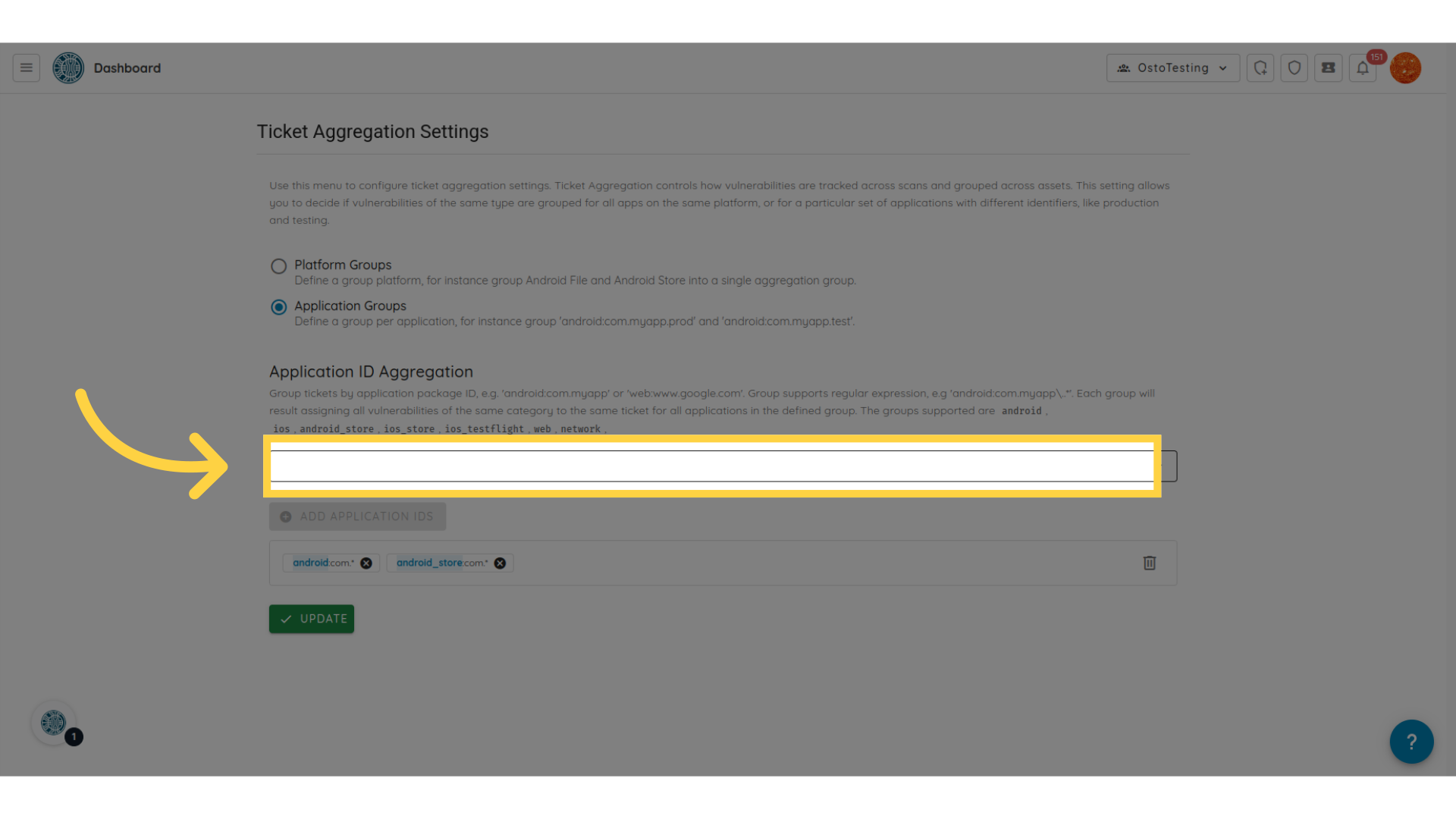
-
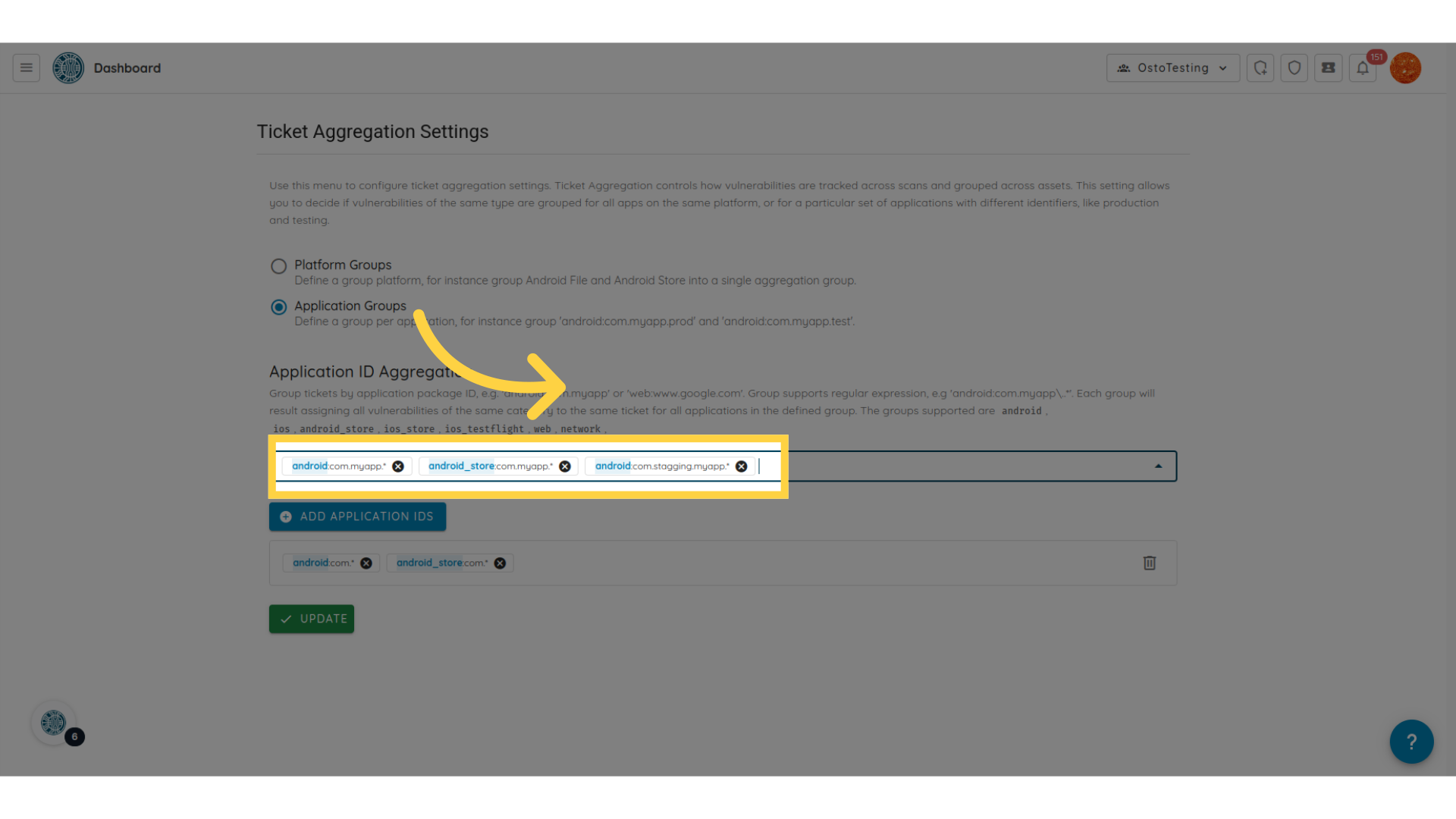
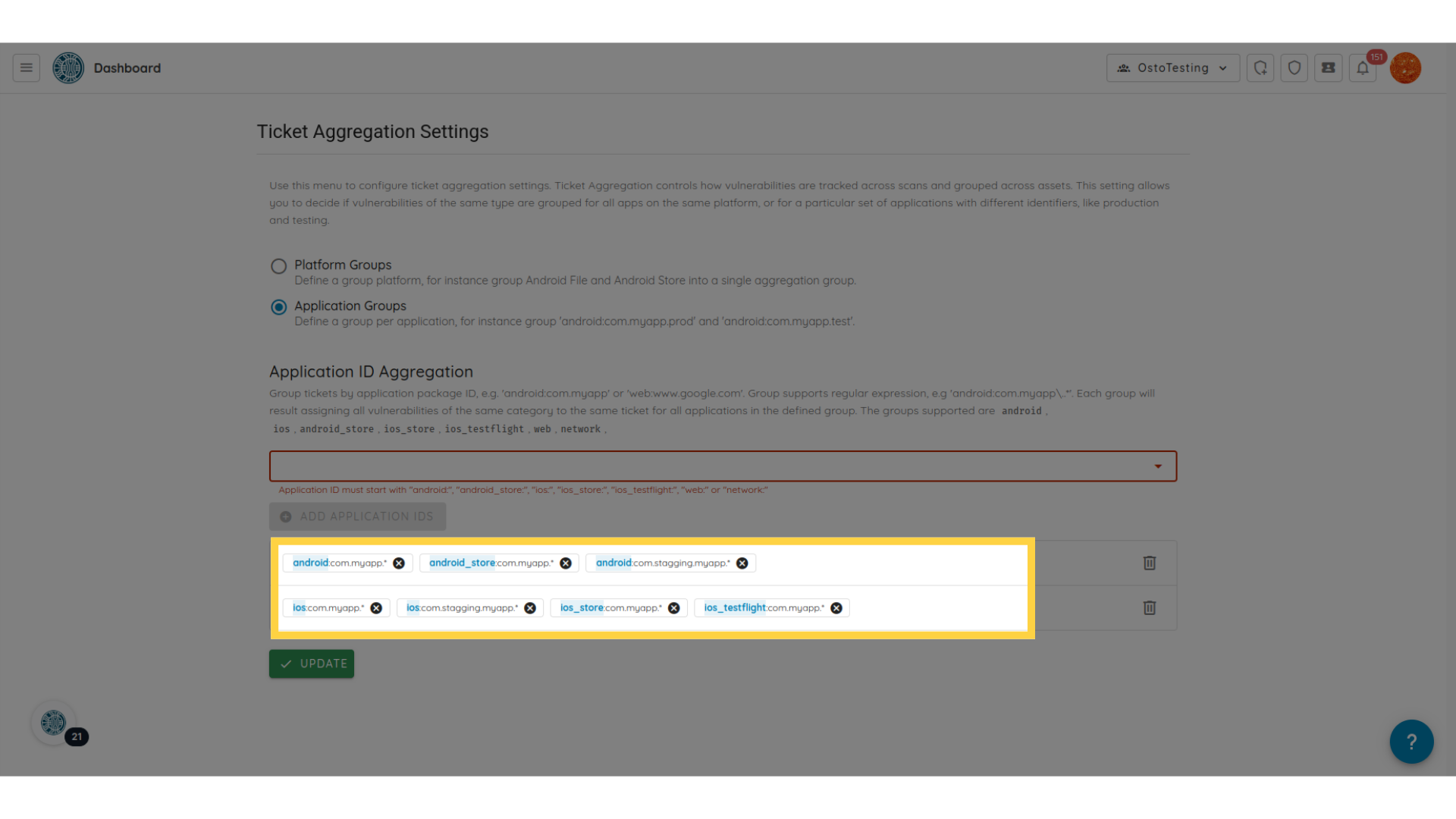
For example, we want to group the Android files from the packages
com.myapp.chatandcom.staging.myapp.chatand also the prod version in the Android Store. Add the platform and the application ID, for example:android_file:com.myapp.chat,android_file:com.staging.myapp.chat, orandroid_store:com.myapp.chat. The field also supports regular expressions likeandroid_file:com.myapp.*.The list of supported platforms is
android_file,android_store,ios_file,ios_store,ios_testflight,harmonyos_file,harmonyos_store,web,network.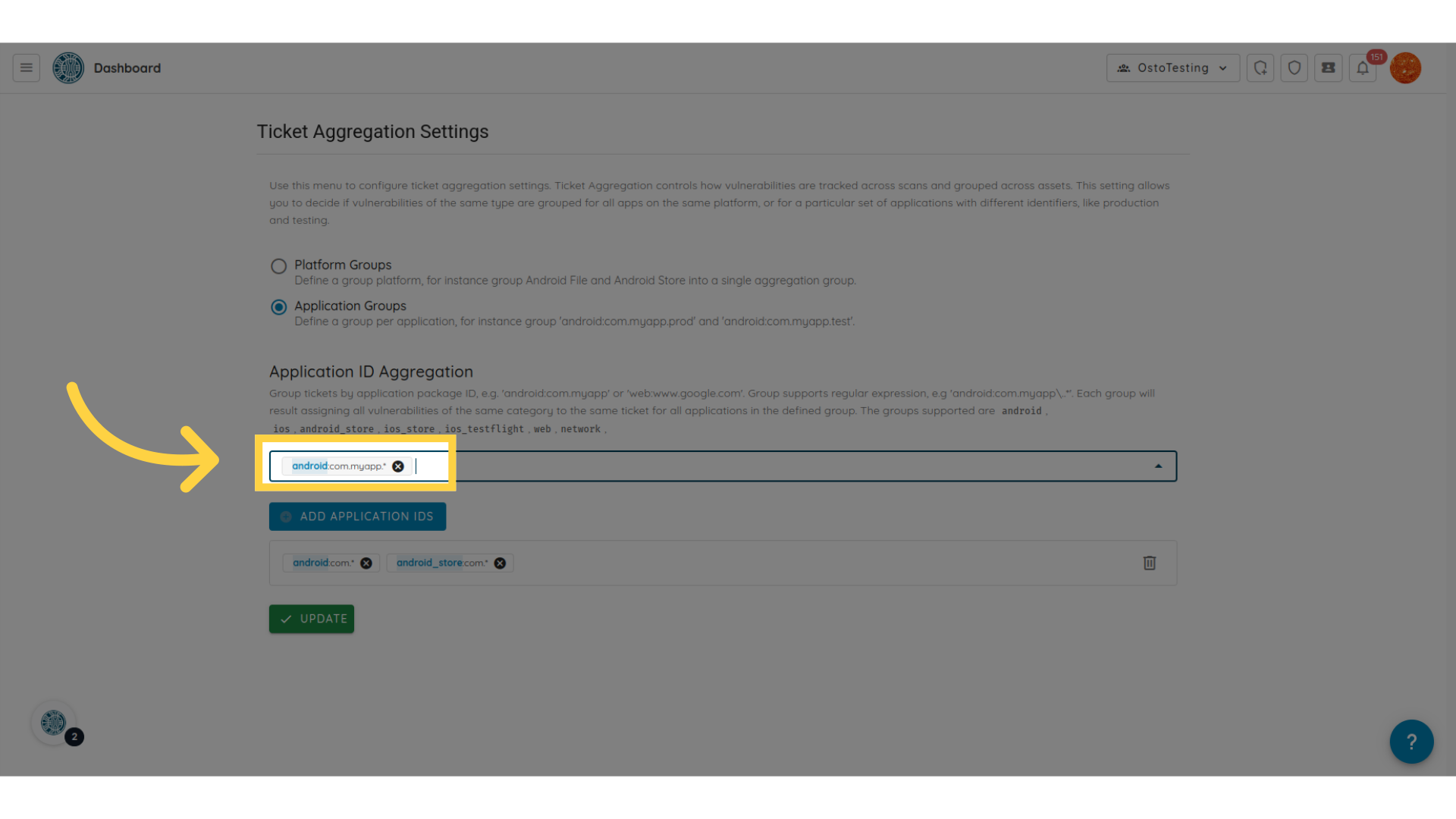
-
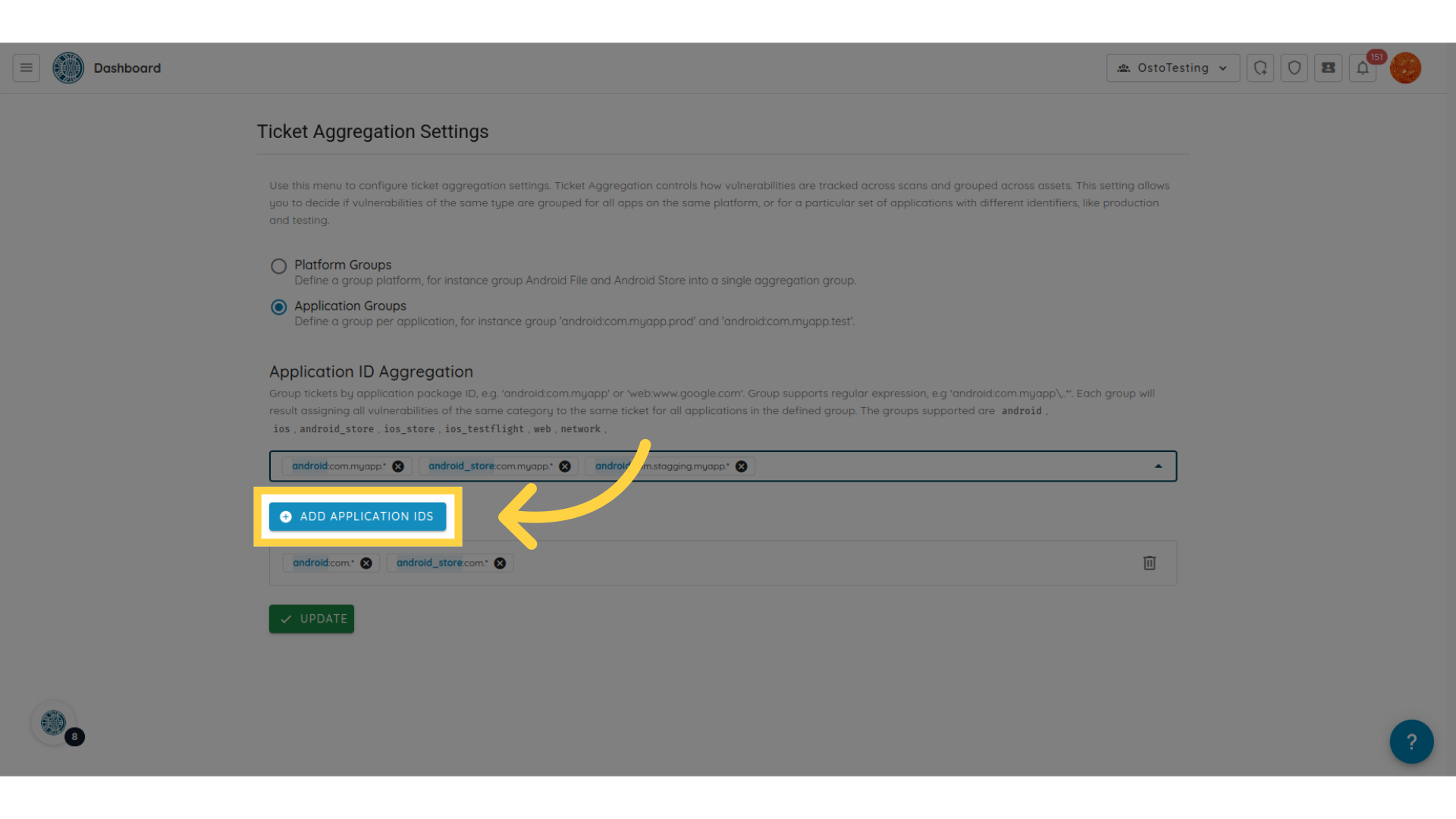
Once all the elements are added, click the Add Application IDs button.
-
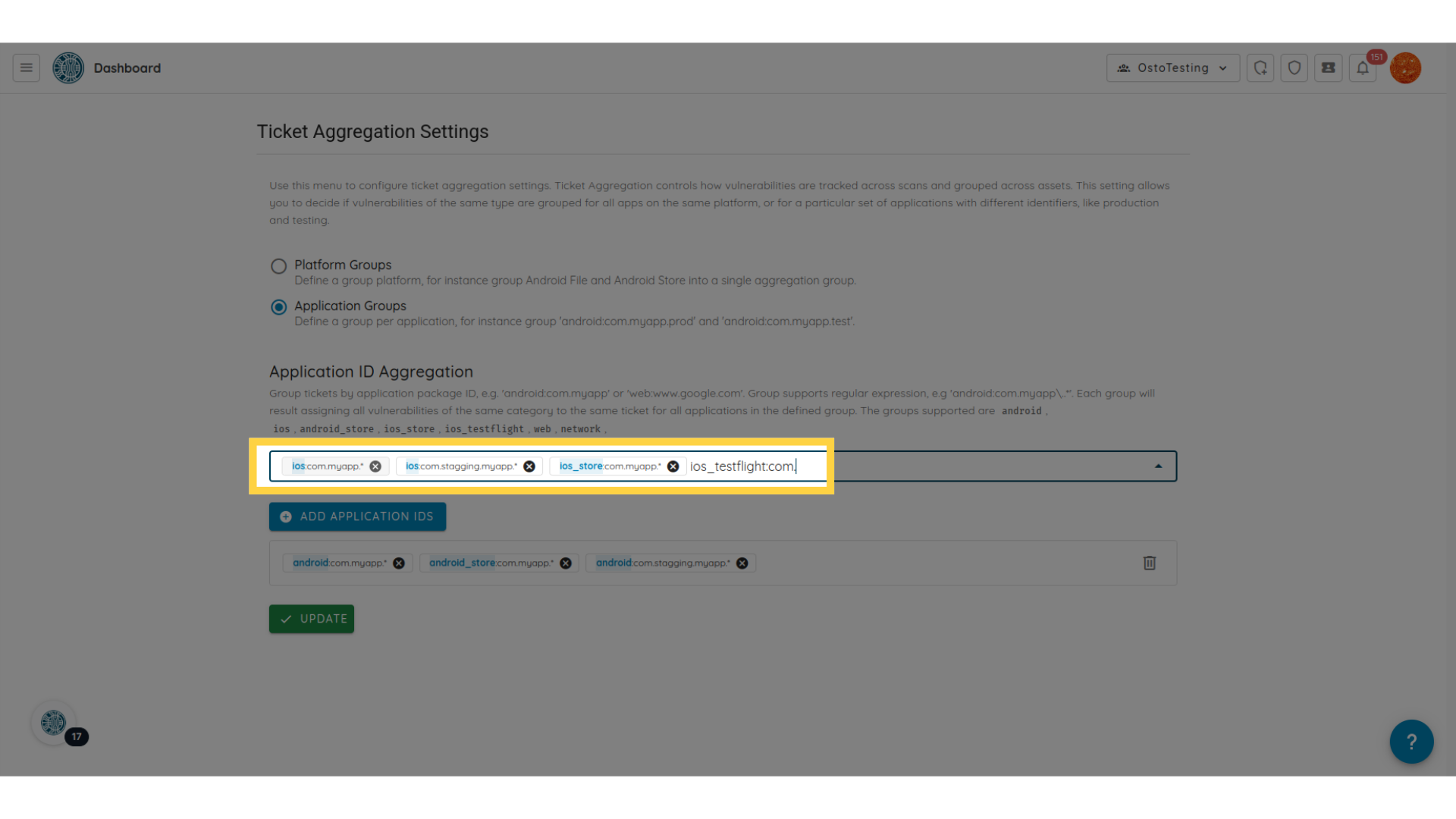
You can add multiple groups, depending on how you want to group the tickets.
-
Click Review Summary to check your groups.
-
Click Save & Apply Changes to save. The old tickets will be closed and new tickets will be created based on the new grouping.